Thursday, 29 August 2013

Recap of Code Name Verity and The Book thief

The theme for the March Grown-up-Read YA Book club was WWII books. We looked at Code Name Verity by Elizabeth Wein and The Book thief by Markus Zusak.

It was agreed that whilst the two books were set in World War II they had very different themes. Code Name Verity is the story of a friendship between two young English women who are enlisted into the RAF during WWII. One is a spy who is captured by the Germans and the other is her pilot. The Book Thief is set in Germany and is narrated by Death whilst It follows a young girl who steals books.

The thoughts were:

On Code Name Verity
  • The narrator's voice was out of sync with the time period and most felt that some of the dialogue was not in keeping with 1940s England.
  • Some readers struggled with the first part as Verity was almost blasé about her experience and it was difficult to empathise with her. However when readers came to the second part of the novel her attitude made more sense.
  • Some readers thought the plot was clever with some good twists and turns and there were some unexpected elements in the book.
  • Issues of class and gender came up in that female pilots and spies are rarely featured in WWII stories. Also it was noted that wartime Britain brought together two women of differing classes.
  • There was speculation that the friendship between Verity and Kittyhawk was more than platonic.
  • Overall there were mixed reviews of the book.
On The Book Thief
  • This was the favourite of the two books due to its complexity and powerful story telling.
  • Whilst there were some very tragic parts it was generally agreed that there was good use of humour as well.
  • The group agreed that the narration was strong, that the reader connected with the characters immediately and that it was beautifully written.
  • Most liked the insight into what it was like for Germans during WWII. The group agreed that the novel highlighted the complexity of how Jews were treated by the Germans and the novel avoided the black and white treatment of the Jews during WWII.
  • The use of symbolism and colour in the novel was liked by some of the group.
  • The group loved the evolving friendship between Liesel and Max as well as her friendship with Rudy.
  • The discussion concluded on who Liesel married and settled with in her later years but it remained inconclusive as to who that he was.
  • Overall the group loved this book.

Saturday, 26 January 2013

Recap: I Capture The Castle


I Capture The Castle - Dodie Smith

Read as the second title in our Classic YA month (January 2013). The thoughts:

  • The important question: Simon vs Neil vs Stephen? I think Stephen generally had a lot of fans, although some people found him a bit too wimpish. Some disapproval of Simon for his inappropriate kissing. Some disapproval for Cassandra for her callousness towards Rose.
  • Narrative device of the diary - did it work for people? Yes, generally, she is trying to be a writer and making it more writerish in places so it does make sense. Really liked the closing lines. General affection towards Cassandra.
  • Cassandra's father - genius or lunatic? Good father? Interesting character to read about but not necessarily one you'd want to know in real life.
  • Some difficulty picturing the castle layout and wishing it had come with a map.
  • Generally this was liked; some of us had read it before, others wished they'd read it as a teenager.
  • Most of us hadn't read the other work Smith is famous for - The Hundred and One Dalmatians - although dogs do feature here, too. Wouldn't necessarily connect the two, though.

Recap: Forever

Forever - Judy Blume


We read this as part of our YA Classics month (January 2013). Some thoughts:
  • Is it a "sex manual", as some critics have suggested, or an actual story? Generally agreed that it seemed to be the former. We discussed 'Ralph' - two points that came up emerged were that it was a way of being explicit without being explicit and also that there was no equivalent for Katherine's ladyparts. Also that Katherine doesn't seem overly concerned about Michael's revelation that he'd had VD - this might be a product of it being very 1970s, when (as the foreword in many editions notes) pregnancy was the sole focus of 'safe sex', rather than disease.
  • We felt it was for younger readers - young teens - rather than older teens, and again there was the suggestion that Katherine and Michael might have been 'aged up' to make the book more acceptable. They seemed young for eighteen, closer to fifteen/sixteen.
  • We wanted more on Artie and to find out how that resolved itself. Also noted that Erica makes an advance on a boy and this is what happens, whereas Katherine is pursued rather than a pursuer.
  • Still one of the most explicit YA books out there re: sex - other titles mentioned included Melvin Burgess's Doing It, Meg Cabot's Ready or Not, William Nicholson's Rich and Mad, Daria Snadowsky's Anatomy of a Boyfriend, and Keith Gray (ed) Losing It.
  • Other Judy Blume books we would recommend? (For some people this was their first Judy Blume and they weren't mad about it. For those of us that had read her other books, this didn't seem to be a favourite.) Summer Sisters and Tiger Eyes.

Tuesday, 22 January 2013

Recap: The Fault In Our Stars


The Fault In Our Stars - John Green

We read this in May 2012, for our very first bookclub meeting.


  • Some of us had read it already and had varying levels of John Green obsessiveness. Looking for Alaska, his first book, came up a lot as the title of his next to try, if new to his work.
  • We discussed whether we surprised by the ending or if we'd seen it coming? If we saw it coming, did that affect how we read the book? Also talked about it as a tear-jerker but very very funny also.
  • We talked about the great love story and also which of the supporting characters we found most interesting - Isaac, Kaitlyn, Hazel's parents.
  • There was inevitably talk of cancer and death and mourning. People said some smart things here - about the public grieving on Facebook (for Gus's ex), the way the characters talk about cancer as part of them, the importance of the written word.
  • Authorship and stories and truth came up a lot - both in relation to the fictional novel within the novel, An Imperial Affliction, but also the author's note at the beginning of the text.

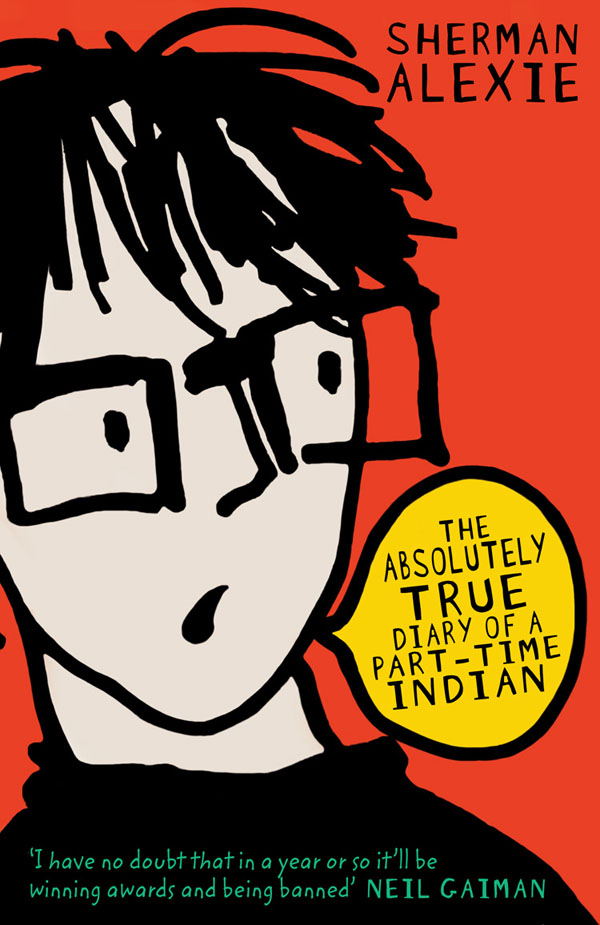
Recap: The Absolutely True Diary of a Part-Time Indian

The Absolutely True Diary of a Part-Time Indian - Sherman Alexie
We discussed this in July 2012. Some things that came up:

  • the format of it and the fact that it's described as a 'true diary' - in some ways it felt a little bit like a memoir and some of us were aware that it was slightly autobiographical, which fed into how we read it.
  • we talked about how it handles the Native American/Indian issues, e.g. violence, alcoholism, poverty, and discussed whether it was at times too self-aware and preachy (aimed at educating readers than being true to the character).
  • basketball and success at sports - what would it be like for someone who didn't have that skill set in a mainstream school, was it too easy for him?
  • what age group we thought the book might be for - particularly with the UK cover it seemed as though it was aimed at younger teens or preteens, but with the subject matter it seemed more an older teen book.

Thursday, 6 December 2012

First post!

Hi guys - here be the inaugural post at the blog. I'm hoping this can serve as a way of continuing bookish discussions beyond meetups, and also provide an opportunity for people to share their thoughts even if they can't make it on a particular evening. :)